 By Lee Eugene
Converting an unused basement into a custom home wine cellar unlocks prime, unused square footage while establishing the ideal environment for aging and preserving your wine collection. Basements offer natural thermal mass, subterranean cooling, and protection from direct sunlight, making them the most structurally advantageous location in any home for wine storage. Transforming a cold, concrete basement into a temperature-controlled showcase elevates your living space, creates an extraordinary venue for entertaining, and adds measurable long-term value to your residential property.
Evaluating Basement Conditions for Optimal Climate Control
Establishing absolute climate stability represents the primary technical goal of any cellar conversion project. Wine preservation requires a constant temperature around 55 degrees Fahrenheit along with relative humidity levels between 60 and 70 percent to prevent corks from drying out and oxidation from spoiling your bottles.
Unfinished basements provide natural subterranean temperature dampening, but ambient home fluctuations still disrupt unconditioned spaces. Assessing your foundation walls for groundwater penetration, air leaks, and seasonal humidity spikes ensures your climate control system operates efficiently without fighting environmental drafts.
Technicians begin by installing an exterior-grade vapor barrier against raw concrete surfaces to block ground moisture. Adding closed-cell spray foam insulation seals thermal leaks and prevents condensation buildup behind cellar framing, building an airtight envelope that shields your investment against seasonal weather shifts.
Constructing the Thermal Envelope and Installing Vapor Barriers
Building a proper thermal envelope keeps cold, humid air inside the cellar while keeping ambient household heat out. Standard drywall and basic fiberglass insulation are insufficient for Millesime wine cellars because continuous humidity causes mold growth and structural decay in traditional building materials.
Framing the room requires treated lumber or metal studs paired with mold-resistant green board or seamless cement board on the interior walls. Applying six-mil polyethylene sheeting or applying closed-cell polyurethane foam across all walls and ceiling joists forms an impenetrable barrier against moisture migration.
Installing an exterior-grade, solid-core insulated door with comprehensive weather stripping seals the entrance completely. Omitting hollow interior doors prevents thermal leakage, ensuring your cooling condenser maintains exact climate parameters without running continuously.
Designing Custom Wine Racking and Storage Layouts
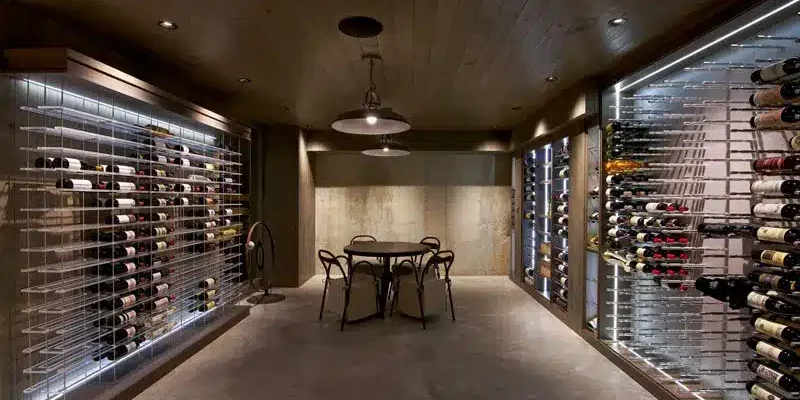
Designing custom wine racking transforms raw wall space into an organized visual showcase tailored to your collection size and aesthetic preference. Racking configurations must balance high-density storage capacity with open display areas that highlight premium labels and odd-sized bottles.
Hardwoods like mahogany, red redwood, and white oak remain popular choices due to their resistance to rotting in high-humidity settings and freedom from chemical odors that taint wine flavor profiles. Modern metal racking offers a sleek alternative, suspending bottles horizontally on minimalist iron pins to emphasize clean architectural lines and label visibility.
Incorporating a central tasting table, LED-lit display archways, or crate storage drawers adds functional versatility to the layout. Proper bottle orientation keeps wine contact against the cork continuously, preserving bottle seals over decades of cellar maturation.
Choosing Moisture-Resistant Flooring and Interior Finishes
Selecting flooring and finish materials requires strict attention to moisture resistance and structural weight tolerance. Wine collections create substantial concentrated floor weight, requiring stable concrete subfloors that will not flex or warp under full capacity.
Avoid carpet, unfinished wood, and standard laminate flooring, as high humidity levels inevitably induce warping, buckling, and fungal growth in organic porous flooring materials. Slate tile, porcelain tile, sealed concrete, and reclaimed wine barrel flooring provide durable surfaces that handle ambient humidity with ease.
Wall finishes should feature low-VOC paints, natural stone veneers, or sealed wood paneling that resist dampness without off-gassing chemical fumes. Non-emitting finishes safeguard delicate wine aromas while contributing to an inviting, sophisticated subterranean ambiance.
Conclusion
Converting an underutilized basement into a state-of-the-art wine cellar combines technical precision with luxury home design. Building a sealed thermal envelope, selecting a dedicated cooling unit, and installing moisture-resistant materials ensures your collection matures under ideal climate parameters. Thoughtful racking layouts, safe LED lighting, and smart monitoring systems transform dark subterranean square footage into a stunning architectural focal point. Investing in professional basement wine cellar conversion preserves your finest vintages, elevates your hosting experience, and crafts an enduring sanctuary for wine enjoyment right inside your own home.